
The Best of China: Top Experiences
Everyone knows the Great Wall and the Forbidden City are coming. These are the experiences our Persocal team actually flags as the ones people talk about most once they're home.
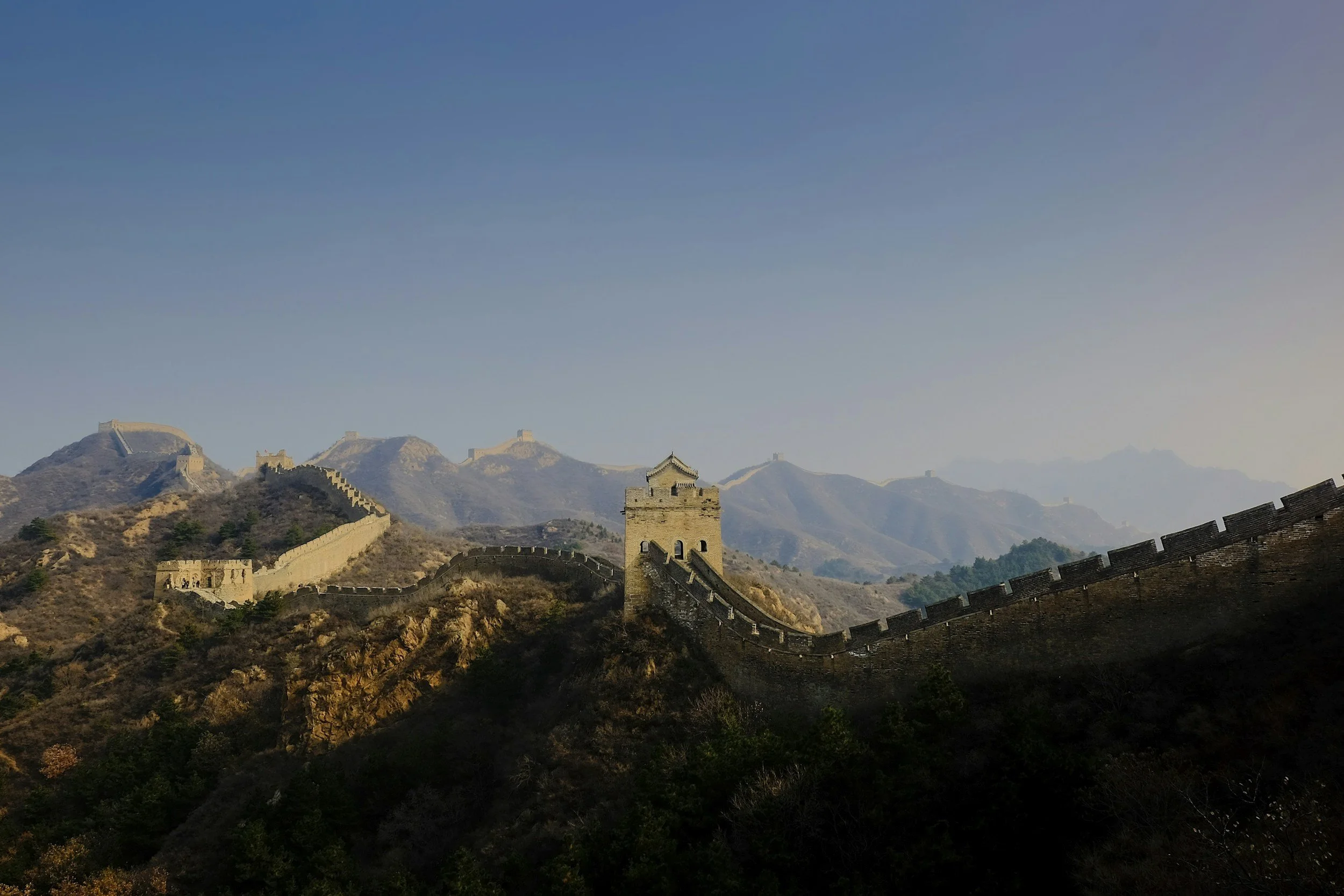
Walking an unrestored section of the Great Wall. Mutianyu and Badaling are the accessible, restored, and crowded sections. Jiankou, steeper and unrestored, requires more effort and caution but delivers a version of the Wall that looks like it hasn't been touched in centuries, because it largely hasn't.
The Terracotta Army at opening time. Thousands of individually detailed soldiers, discovered by farmers digging a well in 1974, arranged in battle formation exactly as they were left over two thousand years ago. Arrive right at opening to see Pit 1 before the tour groups fill the walkway.
Giant pandas at a Chengdu conservation base, in the morning. Pandas are most active in the cooler morning hours, making an early visit worth the earlier alarm — by early afternoon, many are sleeping and considerably less interesting to watch.
A street food crawl through Xi'an's Muslim Quarter. Lamb skewers, biang biang noodles, and pomegranate juice sold from carts that have been in the same families for generations — one of the most concentrated, best street food experiences in the country.
A Li River cruise into Yangshuo. The karst peaks along this stretch of river appear on the back of the 20 yuan banknote for a reason — they're genuinely that striking, especially in the soft light of early morning.
Shanghai's Bund at night. The colonial-era buildings on one side, Pudong's futuristic skyline lit up across the river on the other — one of the more dramatic urban contrasts anywhere in the world, best seen from the Bund side looking across.
A tea ceremony in a proper Chengdu teahouse. Slower and more social than the term "ceremony" implies — locals spend entire afternoons at teahouses playing cards and chatting, and joining in, even briefly, offers a genuine window into daily life.
Cycling Xi'an's ancient city wall. One of the few complete ancient city walls left in China, wide enough to bike its full loop, roughly 14 kilometers, with views down into the old city on one side and the modern skyline beyond it.
A hutong walk in Beijing, away from the touristy ones. The narrow alleyways of old Beijing are disappearing fast to development — wandering a quieter, less commercialized hutong neighborhood shows a version of the city that's genuinely vanishing.
Dim sum in Guangzhou or Hong Kong, done properly. Early morning, a rolling cart, and a teahouse full of locals rather than visitors — dim sum as a slow, social breakfast ritual rather than a quick meal.
A boat ride through Suzhou's canals. Often called the "Venice of the East," Suzhou's classical gardens and canal-lined old town offer a quieter, more contemplative pace than either Beijing or Shanghai, and it's an easy day trip from either.
Watching a Sichuan opera face-changing performance in Chengdu. A theatrical tradition unique to the region, where performers switch elaborate masks in a fraction of a second through techniques still closely guarded by performing families — genuinely startling to watch live even with some idea of how it's done.
Sunrise over the karst peaks near Yangshuo, from a bamboo raft. A quieter, slower alternative to the larger Li River cruise boats, offering a closer, more intimate view of the landscape at the hour it looks best.
FAQ
Do I need a tour guide for the Terracotta Army? Not required, but a knowledgeable guide adds real context — the site itself provides limited English information beyond basic signage.
Is the unrestored Great Wall section safe to walk? Jiankou requires reasonable fitness and caution, particularly in wet weather — it's not for anyone uneasy on uneven, occasionally steep terrain.
Are pandas guaranteed to be visible and active? Nothing in wildlife viewing is fully guaranteed, but morning visits meaningfully improve your odds of seeing them awake and moving.
Is dim sum available all day, or just mornings? Traditionally a morning-to-early-afternoon ritual, though many restaurants now serve it later — the full social, cart-service experience is still best experienced early.
A night market crawl in a second-tier city like Chengdu or Xi'an. Less polished and less crowded than the famous Beijing or Shanghai night markets, with prices and authenticity that generally improve the further you get from the main tourist strip.
Hong Kong's Star Ferry across Victoria Harbour. A short, cheap ride connecting Hong Kong Island and Kowloon, and one of the best low-cost ways to see the city's dense skyline from the water rather than a rooftop bar.
A calligraphy or ink painting lesson in a public park. Beijing and Shanghai parks are full of amateur calligraphers practicing with water on stone in the early morning — many are happy to show a curious visitor the basics, no formal class required.
