
The Best of Portugal: Top Experiences
Portugal has no shortage of "top ten" lists built around landmarks — the same six photos of the same six places. These are the experiences that actually shape a trip, the kind that come up when someone who's been describes what they'd do differently next time.
A quinta tasting in the Douro Valley. Skip the big export-brand names most people have heard of and ask a small producer for a tasting instead. The wine is frequently just as good, the setting is usually a working terrace looking straight down the valley, and nobody's rushing you out for the next tour bus. Most quintas will do this for the cost of the bottles you end up buying, not a fixed tasting fee.
Sunset from the Dom Luís I Bridge. Free, always crowded, and worth it anyway — the best view in Porto, over the Douro and the stacked rooftops of the Ribeira, with port wine boats moored below on the water. Get there thirty minutes early and claim a spot on the upper deck rather than the lower one; the sightline is better and the crowd is thinner.
Surfing, or at least trying to, near Sagres. The western Algarve has some of the most consistent, least crowded breaks in Europe, and lessons are widely available and genuinely cheap by Western European standards. Even a rough first attempt tends to become the story people tell about the trip afterward, more than any restaurant or view does.
A pastelaria before 9am. A pastel de nata is best eaten warm, standing at the counter of a bakery that's been making them the same way for decades, not sitting down at a tourist café near a monument that reheats them from a tray. Ask a local which bakery they use — everyone in Lisbon has a strong, specific opinion about this, and it's rarely the famous one tourists queue for.
Sintra's palaces, early. Pena Palace and Quinta da Regaleira are genuinely worth the visit, but only if you're through the gates within the first hour of opening. After that, the narrow paths and small rooms turn a beautiful site into a crowd-management exercise, and a lot of the atmosphere goes with it.
A market morning in Lisbon. Mercado da Ribeira, or better, one of the smaller neighborhood markets away from the tourist-focused food hall section — bought with no plan beyond seeing what looks good that day. It's closer to how people who actually live there eat, and a useful contrast if you've spent a few days eating at restaurants aimed at visitors.
Doing nothing at a quinta for a night. Not really an activity — the opposite, in fact. A night with no itinerary at a Douro estate, wine included, tends to be the thing people mention first when they talk about the trip weeks later, ahead of anything that was actually planned.
A day in Aveiro. An hour by train from Porto, built around canals and colorful moliceiro boats, and consistently overlooked in favor of bigger names. Worth a day trip if you have one to spare, especially paired with the nearby beaches at Costa Nova and their striped houses.
Fado, somewhere small. The big fado houses aimed at tour groups are fine, but a small, unmarked bar in Alfama with a handful of tables and a singer performing for whoever happens to be there is a different experience entirely — ask a local for a recommendation rather than booking the first result online.
A drive through the Alentejo's cork country. Vast, rolling, half-wild landscape dotted with cork oaks and whitewashed farmhouses, and one of the emptiest, quietest parts of the country to drive through. Évora makes a good base, with a Roman temple in the middle of town and some of the best-value wine in Portugal.
Grilled fish at a no-name spot on the coast. Almost anywhere along the Algarve or the coast north of Lisbon, the best meal of a trip tends to be an unbranded grill restaurant with plastic chairs and a fish counter you point at, not a restaurant that shows up in the first page of search results.
A tram ride that isn't Tram 28. Tram 28 draws the queues; Tram 15 out to Belém covers different, less crowded ground with a similar old-city feel and a fraction of the wait.
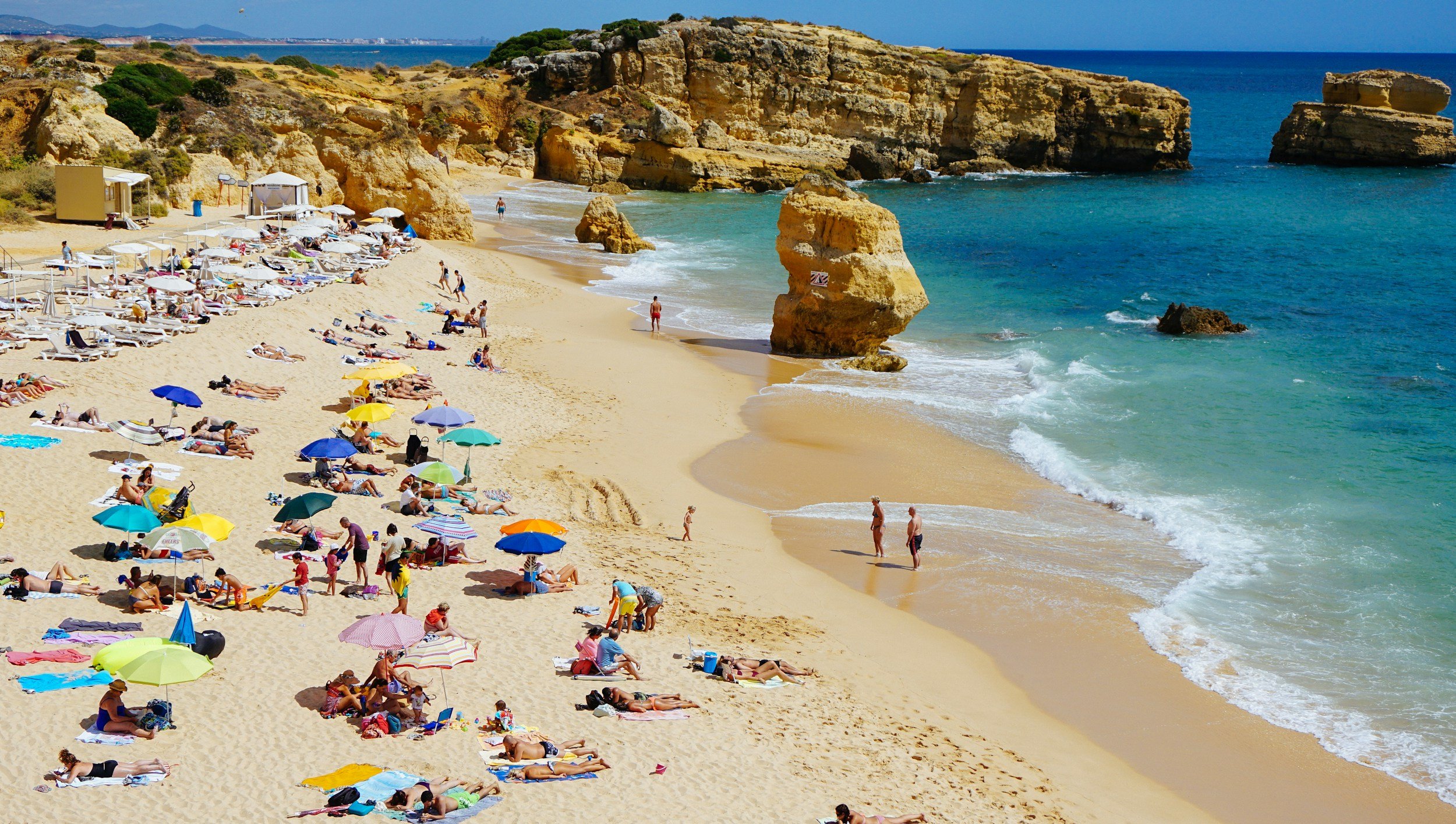
Swimming at Praia da Marinha. Frequently ranked among Europe's best beaches, and it earns it — dramatic rock arches, clear water, and a hike down that keeps the crowds thinner than the beaches with direct parking access.
How to combine these into a day
A strong single day looks something like: an early market visit, a slow lunch built around grilled fish, an afternoon at a viewpoint or beach, and an evening built around either fado in a small bar or a long dinner with no reservation pressure. The pattern that works across almost all of these: mornings for anything popular or photogenic, afternoons for food and slower activities, evenings for whatever's local and unplanned.
FAQ
Do I need to book Sintra tickets in advance?
Yes, especially for Pena Palace in peak season — timed entry tickets sell out by mid-morning on busy days, so book online the night before at the latest.
Is the western Algarve hard to reach without a car?
Buses connect Lagos and Sagres, but they're infrequent and the smaller coves beyond Sagres are genuinely easier with a car. If you're not driving, base yourself in Lagos rather than further west.
What's the most overrated experience on this list — honestly?
Tram 28 in Lisbon draws huge queues for a ride that's more crowded than charming most of the year. Walking the same route covers similar ground with none of the wait.
Is Praia da Marinha worth the hike down?
Yes, though it's steep and has no shade — go early or late in the day, bring water, and expect the walk back up to feel harder than it looked going down.
