
The Complete Guide to Macau
Most visitors arrive in Macau expecting a smaller, quieter version of Hong Kong with a few casinos attached. What they find is closer to a Portuguese colonial town welded onto one of the highest-grossing gambling strips on the planet, with several centuries of layered history compressed into an area you can walk across in an afternoon. This guide covers how to actually split time between the two very different versions of the city, plus what to know before you go.
Best time to visit Macau
October through December is the strongest window — lower humidity, comfortable temperatures, and clear skies for walking the historic center. March through May is also solid, ahead of the summer heat. June through September brings heat, humidity, and typhoon risk, with occasional storm-related closures worth checking before booking dates that fall in this window. Chinese New Year and Golden Week (early October) bring heavy crowds from mainland visitors and inflated hotel rates, worth avoiding unless the festival atmosphere itself is the draw.
Macau Peninsula and the historic center
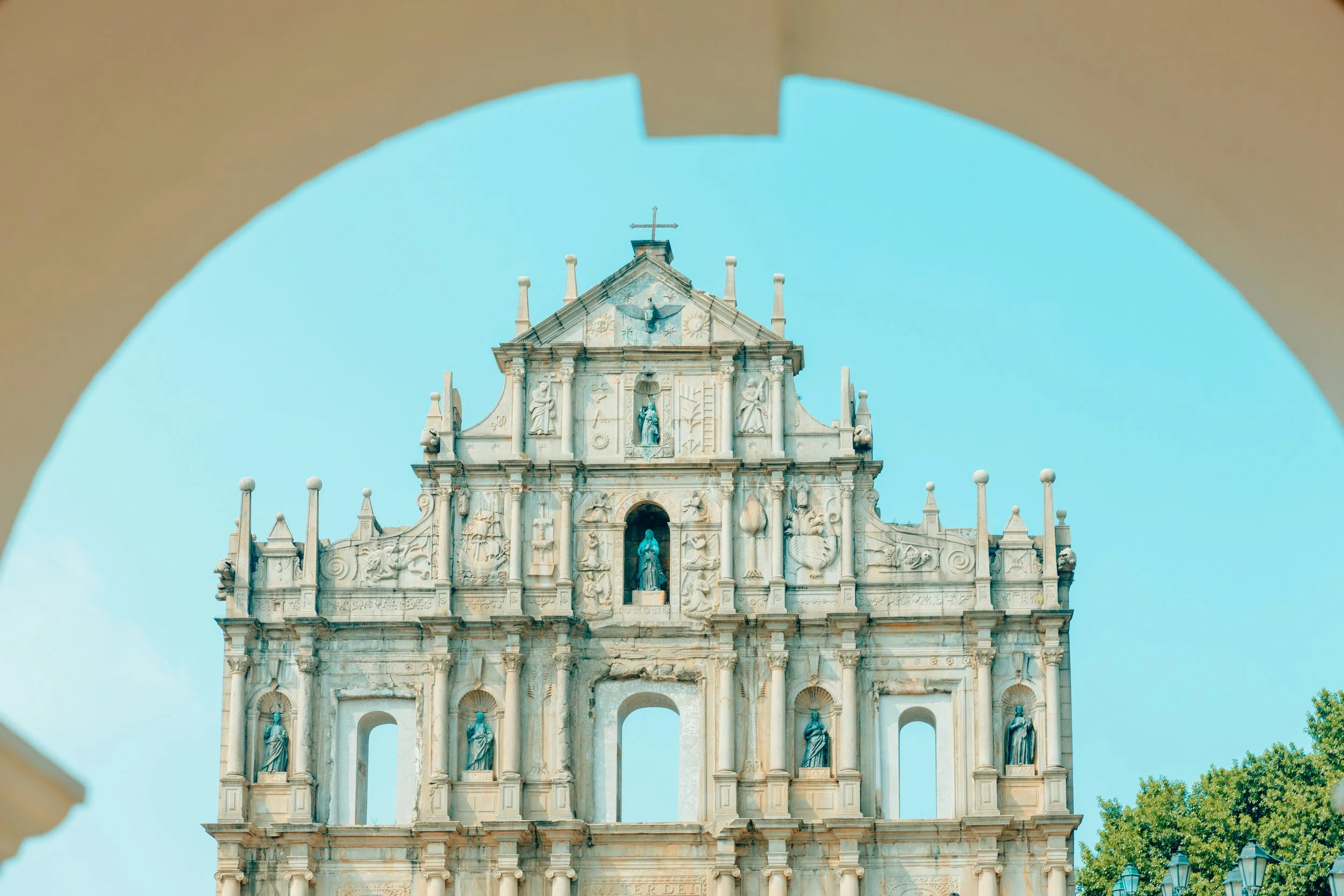
The UNESCO-listed Historic Centre of Macao is the reason to visit beyond the casinos — a compact district of Portuguese colonial architecture, Chinese temples, and cobblestone squares that tells the story of nearly 500 years as a trading post between Europe and China. The Ruins of St. Paul's, Senado Square, and the Macau Museum sit within easy walking distance of each other, and a full day covers the core sites without rushing.
The Cotai Strip
Built largely on reclaimed land between the islands of Taipa and Coloane, the Cotai Strip is Macau's answer to the Las Vegas Strip — mega-resorts like The Venetian Macao, Studio City, and Galaxy Macau, each built around a theme and connected by shuttle buses and elevated walkways. Even visitors with no interest in gambling generally find an hour or two worth spending here, if only for the sheer scale and spectacle of the architecture.
Taipa Village
A quieter, more residential counterpoint to both the historic center and the casino strip — narrow streets, small temples, and some of Macau's best Macanese food, a fusion cuisine blending Portuguese, Chinese, and Southeast Asian influences that exists nowhere else in the world. Half a day here, ideally over a meal, rounds out the trip well.
Coloane
The most low-key of Macau's districts — a former fishing village with a small black-sand beach, hiking trails, and Lord Stow's original bakery, credited with popularizing the Portuguese egg tart that's since become one of Macau's signature foods. Worth a half-day trip for visitors staying more than two nights.
Getting around Macau
Macau is compact enough that the historic center is entirely walkable on foot. Free shuttle buses run constantly between the airport, ferry terminal, and the major casino resorts, and are widely used by visitors and locals alike to cover the longer distances between the peninsula and Cotai. Public buses are cheap and reliable for everywhere else; taxis are available but less necessary than in most cities this size.
Getting to Macau
Most visitors arrive by ferry from Hong Kong, a journey of roughly one hour across the Pearl River Delta, with frequent departures throughout the day. The Hong Kong–Zhuhai–Macau Bridge offers a road alternative. Macau International Airport serves a smaller number of direct international routes. Visa requirements vary considerably by nationality, and checking current entry requirements before booking is worth doing given rules have shifted in recent years.
Money and daily costs
Macau uses the pataca, though Hong Kong dollars are widely accepted almost everywhere at a near-equal exchange rate. Costs skew moderate to high, driven largely by the casino-resort hotel market — budget travelers can manage on $50–80 a day staying outside the main resort strip; a mid-range trip with good hotels and sit-down meals runs $100–160 a day; the high-end casino resorts and their attached fine dining push considerably higher. Credit cards are widely accepted in the resorts; smaller restaurants and markets in the historic center and Taipa Village often prefer cash.
Macau's casinos, briefly
The casino industry is the reason Macau's skyline looks the way it does, and by revenue it has outpaced Las Vegas for years. Visitors don't need any interest in gambling to find the resorts worth a visit — the architecture, scale, and sheer theatricality of places like The Venetian Macao or Galaxy Macau function as attractions in their own right. Minimum age for casino entry is 21, and photo ID is checked at the door.
Common mistakes first-time visitors make
Treating Macau as a Hong Kong day trip and never staying overnight is the most common one — it means missing the Ruins of St. Paul's lit up at night and the fountain shows that only run in the evening. Spending the entire trip in Cotai's resorts without crossing to the historic peninsula is the opposite mistake, and just as limiting. Underestimating how compact the historic center is, and over-scheduling it, is a third — most of the core sites sit within a fifteen-minute walk of each other, and rushing through misses the side streets that make the district worth visiting at all.
A note on Macau's history
Macau was a Portuguese trading post and colony for close to 450 years, longer than any other European colonial presence in Asia, before its 1999 handover to China as a Special Administrative Region under a "one country, two systems" arrangement similar to Hong Kong's. That extended Portuguese period is why the historic center still carries Portuguese street names, colonial architecture, and a genuine culinary legacy found nowhere else in Asia — Macau's identity was built from that overlap, not layered on as decoration afterward.
Packing and practical notes
Comfortable walking shoes matter for the historic center's cobblestones and hills, and a light layer is worth packing for evenings between November and February, when temperatures dip more than the daytime warmth suggests. Sunscreen and water matter year-round, and an umbrella is worth carrying between May and September, when sudden downpours are common. Power outlets follow both the UK-style three-pin and the European two-pin standard depending on the building, so a universal adapter is the safer bet.
What to know about crowds and timing within the day
The historic center gets noticeably busier late morning through mid-afternoon, driven largely by day-trip visitors arriving from Hong Kong on the morning ferries and departing again in the evening. Arriving at the Ruins of St. Paul's before 9:30am, or returning after 7pm once it's lit for the evening, gives a considerably calmer experience of the same site. The Cotai resorts, by contrast, stay busy well into the night and don't have the same quiet-hour pattern.
Is Macau worth visiting beyond the casinos?
Genuinely yes, and it's arguably the most underrated reason to go — the Historic Centre alone offers a layered, walkable window into nearly five centuries of East-meets-West history that has little to do with anything happening on the gaming floor.
FAQ
Do I need a visa for Macau? Requirements vary significantly by nationality; many visitors receive visa-free entry for short stays, but checking current rules for your specific passport before booking is essential.
How many days do I need in Macau? Two full days covers the historic center, Cotai Strip, and Taipa Village comfortably. A third day allows an unhurried trip out to Coloane.
Is Macau worth visiting if I don't gamble? Yes — the historic center, Macanese food, and Coloane's quieter pace stand entirely on their own, independent of the casino resorts.
Can I visit Macau as a day trip from Hong Kong? Yes, via the roughly one-hour ferry, though an overnight stay allows a much fuller experience of both the historic center and Cotai without rushing.
